If you’ve ever thought about going off‑grid, chances are you’re really after something else: control.
Control over blackouts.
Control over rising energy costs.
Control over how, and when, your home uses power.
A private grid offers a different path to that control. It offers many of the benefits people associate with off‑grid living, without the tradeoffs that usually come with disconnecting entirely from the public grid.
What this article explores: This article explains what a private grid is and how it compares to an off‑grid set up when it comes to the role of the public grid, day‑to‑day energy use, and blackout behavior.
What is a private grid?
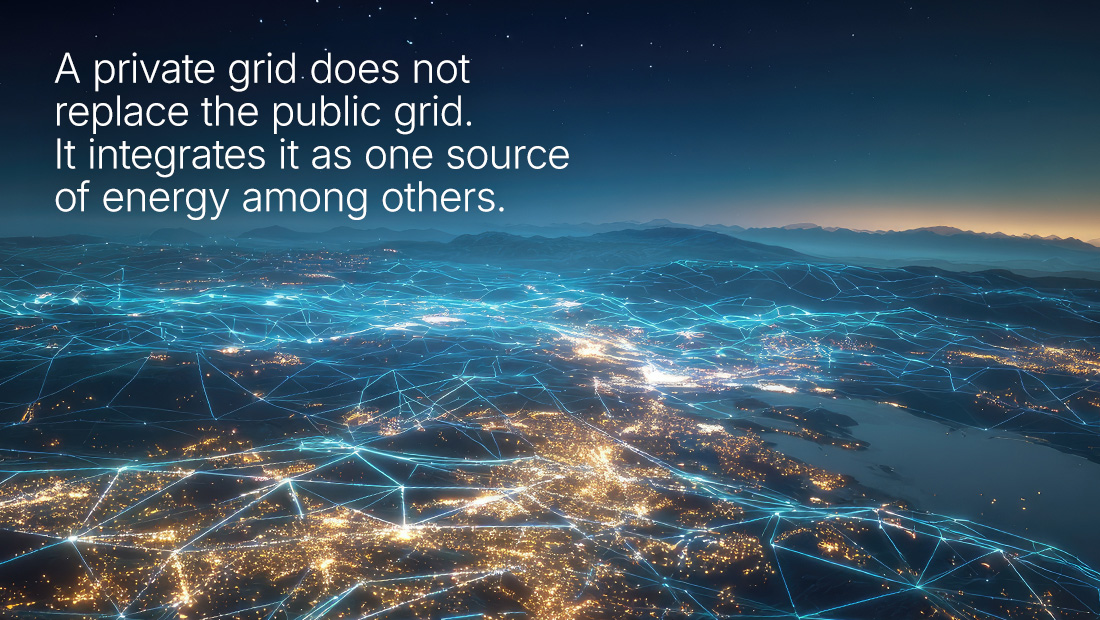
A private grid is a home energy setup where residential energy sources, such as solar panels, home batteries, and electric vehicles, work together with the public grid in a unified network that is coordinated by an intelligent system.
In this setup, the public grid does not disappear. It simply becomes one option among many, rather than the only one.
Reducing dependence on the public grid does not only change where energy comes from but more importantly who it is that is making energy decisions and how they are being made.
In a private grid, energy decisions are guided by household priorities and learned lifestyle factors, so you can choose the most cost‑effective, reliable, or convenient source of energy at any given moment. You do not have to manage the complexity of these decisions yourself. The system manages it for you.
How the public grid fits in: private grid vs. off‑grid
An off‑grid home has no connection to the public grid. Every bit of electricity must be produced, stored, and carefully managed on‑site.
That setup can work, but it comes with limits.
In a private‑grid home, the public grid is still available. It is simply no longer in charge.
Instead of relying on the public grid by default, your home can use stored or solar energy when electricity prices spike, switch back to the public grid when rates are lowest, and reserve stored energy for when it is most useful, such as for charging your EV or for riding through an outage.
The result: You are not locked into utility pricing, peak hours, or grid instability. You decide how much the public grid matters in your life.
In an off‑grid home, energy is always scarce. There is no opportunity to take advantage of low utility rates or to shift usage strategically. Every decision is about preservation.
What everyday life feels like
Off‑grid living: constant planning
In an off‑grid home, energy management is part of everyday life.
You are always thinking: How full is the battery? How much sun is expected today? Is it worth running that appliance now, or should I wait?
Big loads like EV charging, heating, cooling, and doing your laundry require you to adjust your comfort and convenience according to the energy you have available.
Private‑grid living: energy adapts to you
In a private‑grid home, energy fades into the background.
Instead of planning your life around energy, energy is planned around your life.
The system coordinating your private grid learns how your home uses power throughout the day and aligns production, storage, and consumption accordingly.
What that means in practice is simple. You do not time chores around sunshine. You do not calculate when it’s the right time to charge your EV. Heating and cooling feel normal, not strategic.
Energy becomes predictable and dependable.
What happens during a blackout
If you are off‑grid, a blackout does not change anything. Your home is already disconnected from the public grid.
A private‑grid home also relies on local energy during an outage, but with an important difference: intelligent control.
When the public grid goes down, your home intentionally disconnects and enters a protected operating mode where your solar, battery, and EV can continue working together as a coordinated system.
Instead of simply keeping the lights on until energy runs out, the system actively manages how energy is used. The goal is not simply to keep the lights on, but to do so in a way that minimizes disruption to your daily life while maximizing the availability of energy throughout the outage.
You decide how you want your home to function, and the system handles the execution.
The system behind a private grid
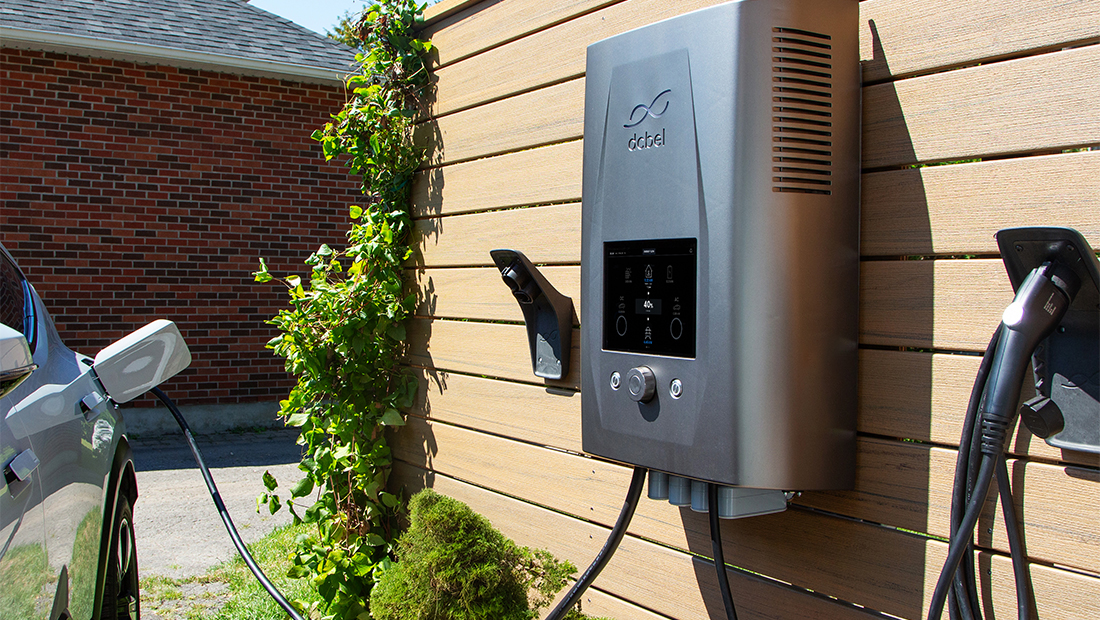
dcbel’s Ara Home Energy Station coordinates a private grid.
Ara brings blackout power, energy storage, solar integration, bidirectional EV charging, and smart energy management into a single system. This removes the inefficiencies of fragmented solutions that do not communicate with each other.
With Ara, homeowners do not need to micromanage energy or become experts. The system makes real‑time decisions that balance cost, reliability, and comfort based on your preferences.
The goal is not total isolation. It is energy autonomy: real control over how your home produces, uses, and protects energy today, while staying ready for what comes next.