Energy technology is moving fast. Just a few years ago, installing solar panels felt like the ultimate step toward energy independence. Today, homeowners are starting to think twice before investing in solar systems that could be outdated in only a few years. The reason is simple: most legacy solar setups operate in isolation and cannot integrate with newer technologies like electric vehicles (EVs), home batteries, or heat pumps.
This lack of integration matters more than most people realize. Modern energy management is about flexibility and control. When your solar panels can interact with other devices, they become part of a private grid.
A private grid is a homeowner-controlled energy ecosystem that brings together solar panels, home batteries, EVs, and the utility grid into one intelligent network. This network lets you generate, store, and consume energy in the most efficient and cost-effective way possible.
Imagine never worrying about peak electricity rates because you can draw from your own stored energy. Picture charging your EV overnight without stressing about grid demand or outages. You can even keep your home running during blackouts, giving you peace of mind and comfort.
A private grid means more convenience, control, and independence – but not all systems are made equally.
The Problem with Legacy Solar Systems
Traditional solar systems were designed for a simpler time. They produce electricity and feed it into your home or the grid, but they do not “talk” to other devices. This siloed approach limits your ability to maximize energy usage.
While it may be technically possible to upgrade older systems to support bidirectional energy flow or smart automation in the future, doing so will require expensive hardware additions and rewiring. For many homeowners, that is a dealbreaker.
From Sun to Socket
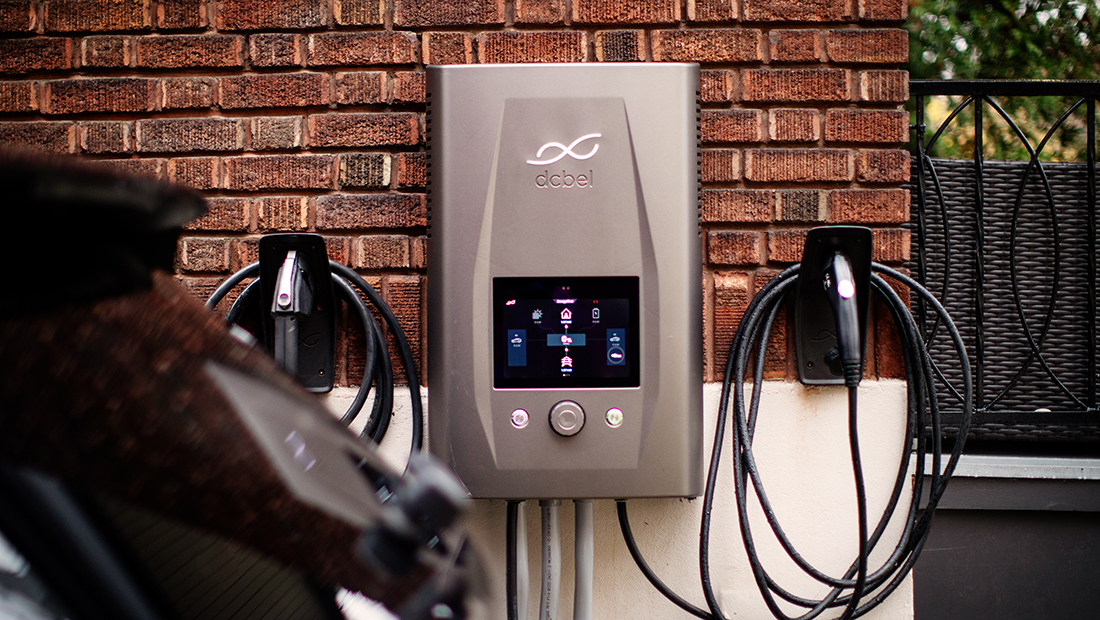
Ara was built with the idea of solar being a central component of your private grid. That’s why dcbel patented its all-in-one solar solution, dB Sol, to work with the Ara so you get a direct and efficient path to capture the power of the sun in other components of your private grid like your EV or home battery.
Installing dB Sol is easy and straightforward. It is essentially plug-and-play, integrating effortlessly with various PV module brands and models so you never have to invest in hardware upgrades.
Once your solar is part of your private grid, you won’t be solely dependent on it to power your home at all times. The newly unlocked ability to interact with your EV enables powerful bidirectional capabilities like Vehicle-to-Home (V2H), which lets your EV power your home during peak loads or outages, and Vehicle-to-Grid (V2G), which allows you to earn money by sending energy back to the grid.

Control at Your Fingertips
Managing your private grid is simple thanks to Ara’s Mobile Portal and built-in screen. You can monitor how your solar panels, EV, and home battery interact in real time. Check energy flows and manage charging schedules from one intuitive interface.
Running diagnostics for your private grid is smooth sailing – dcbel’s Control Center provides live alarm monitoring to proactively assess and resolve issues.
Ara also connects to the dcbel App Hub, an energy app store designed to grow with a variety of secure third-party apps. Today, you might install apps to track emissions, personalize your energy usage or join demand response programs. Tomorrow, you could unlock groundbreaking features like peer-to-peer energy trading and guest EV charging (think Airbnb for charging stations). This is entirely possible with the Ara as it has transactional capabilities in terms of energy flow and trading that are absent in competing home energy management solutions.
The possibilities are endless, and they all put you in control.
Solving Hardware Headaches
One of the biggest pain points for homeowners today is vendor fragmentation. If you have a single-function solar system, you are likely juggling multiple vendors for panels, batteries, and EV chargers. Each device comes with its own app, support team, and user interface.
This fragmented setup makes troubleshooting a nightmare and prevents you from seeing how your system performs as a whole. The lack of a unified platform leads to confusion, slower problem resolution, and a less reliable energy experience.
Ara eliminates these headaches by ensuring everything works together out of the box.
Universal Compatibility for EVs
Many automakers now sell home energy systems that are branded to their vehicles. These systems include chargers, batteries, and software that only work within that brand’s ecosystem. Homeowners who choose one of these setups are locked into proprietary hardware, which limits flexibility if they want to change their EV. Ara solves this by staying open. It supports all major EV brands and connectors like CCS, CHAdeMO, and NACS without tying you to a single carmaker’s system. No matter what you drive today or in the future, Ara keeps your home energy setup adaptable and ready for what’s next.
It’s clear that the era of single-function solar hardware is coming to an end. Homeowners need energy systems that are flexible, future-ready, and built for integration, not isolation. The Ara provides exactly that.