Homeowners across the US are embracing solar to cut energy bills, protect themselves from outages and take control of their power. Many have gone further, adding EVs and battery storage for backup and selling extra energy back to the grid.
Yet even with all this clean energy hardware in place, most homes still miss out on the biggest savings and revenue opportunities.
The reason is simple: there’s no intelligence coordinating it all.
Without a system that can predict, adapt and automate decisions in real time, solar, batteries and EVs remain underutilized assets instead of a unified energy engine.
To understand the value of this kind of intelligence, though, it helps to see where traditional home energy management systems fall short.
Fragmented devices, fragmented decisions
In most homes, solar panels, batteries and EV chargers operate as separate devices. Without a smart way to link them up, homeowners end up manually deciding when to charge their EV, when to store solar or when to rely on the grid. These fragmented decisions often lead to missed opportunities and higher bills.
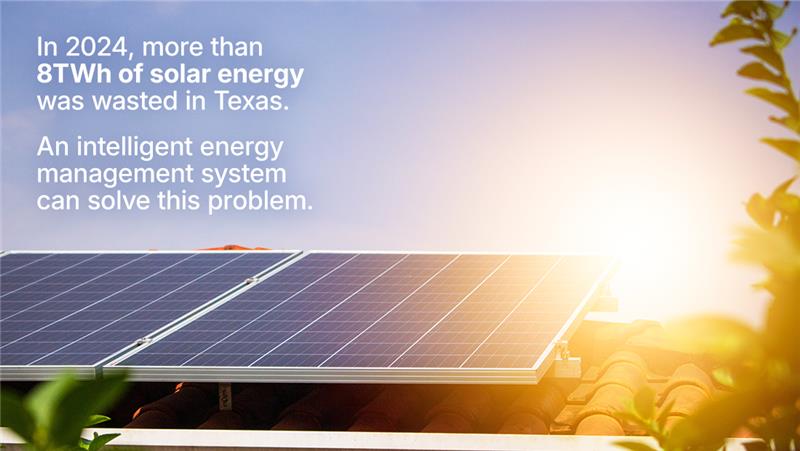
This problem is exemplified in the case of Texas, where solar curtailment has surged. In 2024, more than 8 TWh of solar energy went unused in Texas as generation outpaced transmission capacity.
Every curtailed kilowatt is lost income for homeowners who could have earned through solar buyback, demand response programs or other solar incentives.
No adaptive intelligence
Energy conditions are constantly changing, from weather shifts to volatile prices. Traditional systems can’t adjust, leaving homeowners vulnerable to price spikes and outages.
According to the Energy Information Administration, residential electricity prices in Texas have risen 31% in five years, putting more pressure on families already dealing with reliability issues.
State regulator ERCOT’s tight reserve margins mean system stability depends heavily on weather and renewable output. Even after grid hardening efforts post winter storm Uri in 2021, Texas still suffers outage durations well above the US average.
When you can’t predict, adapt or respond in real time, you’ll always fall behind.
Missed revenue
Home energy is now a marketplace. With vehicle-to-grid (V2G), virtual power plants (VPPs), vehicle-to-home (V2H) and utility incentives, homeowners can turn their energy assets into new revenue streams. However, to generate frequent revenue, you’ll need to track market prices in real time, anticipate demand spikes and schedule exports precisely.
That means processing fast-changing datasets, predicting demand with precision and optimizing energy flows. Humans can’t do this by themselves. That’s why intelligence in the form of AI is essential.
Unified control for a unified home
AI transforms a home full of isolated devices into a single coordinated system. Instead of navigating separate apps and making dozens of daily decisions all by yourself, an intelligent platform unifies solar, battery storage and EV charging under one operating system.
Such a platform predicts how much energy your home will produce and consume, determines the cheapest and cleanest way to use the produced energy and automates everything from charging cycles to grid interactions.
The result is effortless smart home energy optimization, more efficient use of your own solar power and far fewer moments when expensive grid electricity fills the gaps.
Adaptive scheduling and real-time resilience
AI can anticipate weather shifts, price spikes and demand surges which equips it to become a protective layer between your home and an unpredictable grid.
AI pre-charges your battery and EV ahead of storms, shifts major loads to off-peak hours through adaptive load shifting to off-peak hours, and fine-tunes your energy flows throughout the day to avoid unnecessary grid usage.
In states where outages remain common and extreme weather disrupts stability, the ability to adapt in real time delivers both resilience and significant savings.
Automatically enroll in energy markets
AI also unlocks revenue streams that would be too complicated to tap into manually.
It tracks dynamic pricing, forecasts demand during heatwaves and identifies when exporting energy from your solar panels or EV battery will generate the highest return.
AI can also register you in demand response programs, V2G events, and solar buyback offerings automatically.
What was once a maze of spreadsheets, schedules, and manual inputs becomes a background process that steadily boosts your energy returns without requiring your time or attention.
Ara’s Orchestrate OS delivers on all fronts
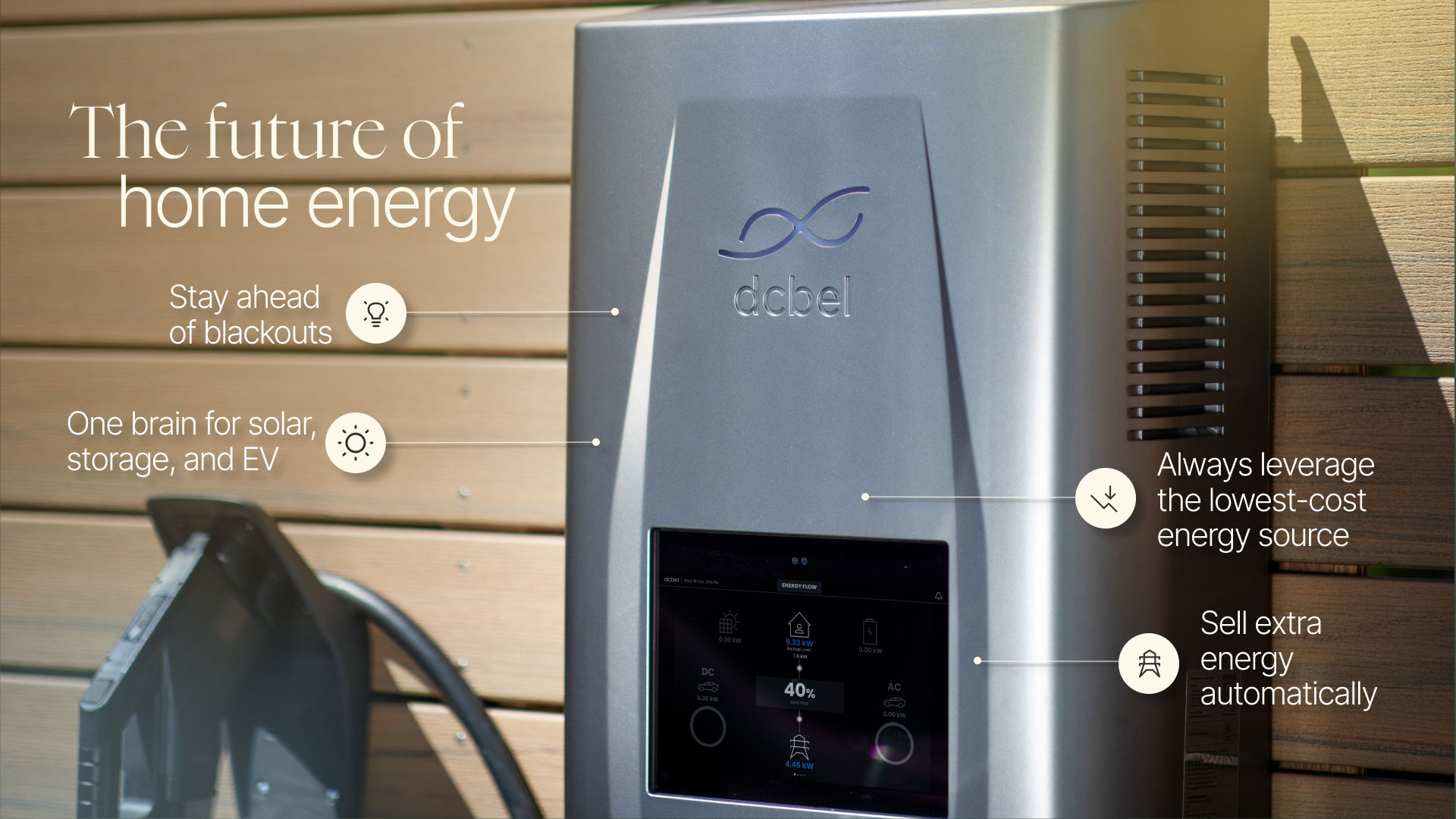
dcbel’s Ara Orchestrate OS energy management system brings this intelligence to life. It acts as the operating system for your home energy ecosystem, weaving together solar, storage, EV charging and grid interaction into one seamless, predictive, AI-powered network.
Smart real-time decisions
Orchestrate OS continuously analyzes weather patterns, utility rates, household activity and solar production to make the smartest possible decisions in real time.
It determines the ideal moments to charge your EV, store excess solar or rely on your home battery backup, ensuring every watt is used in the most efficient and cost-effective way.
Built-in resilience and cost control
When prices rise or storms approach, Orchestrate OS acts automatically. It shifts usage away from high-cost periods, secures storage for emergencies and prioritizes essential loads during outages.
Whether it’s a heatwave, a grid disturbance, or a multi-day blackout, the system transforms your home into a resilient, self-sustaining energy hub.
Active participation in energy markets
Orchestrate OS connects your home to the broader energy ecosystem.
It automates participation in V2G and VPP events, and sells excess solar power back to grid programs, ensuring you benefit financially from every advantageous market moment.
Your home becomes not just a consumer, but a flexible, responsive energy asset.
Personalized insights and a future-proof ecosystem
Because the system learns from your habits, it delivers personalized recommendations, long-term performance insights and automated schedules tailored to your lifestyle.
As new programs, incentives, and technologies emerge, the ecosystem evolves with them, keeping your home at the forefront of energy innovation.